icigp_contact@163.com +86-18000547208

Brief Description:
In recent years, with the rapid development of society, the continuous changes in urbanization and the aging of the population, the demand for mental health services has been increasing, and higher requirements have been put forward for their quality and experience. Traditional mental health services mainly rely on clinical interviews, questionnaires, and self-assessment scales. Although these methods are effective, they have certain limitations in terms of real-time, objectivity, and personalization.
Multimodal emotion recognition technology integrates data sources from vision, speech, text, and physiological signals, enabling more comprehensive and accurate capture of users' emotional states. This technology not only enhances the reliability of emotion analysis but also provides the possibility for real-time and personalized mental health interventions. This special topic invites original contributions, with themes including: emotion recognition based on facial videos, speech (including text), gait, and physiological signals; non-intrusive mental health assessment based on multi-source information fusion; interpretable AI clinical decision support; mental health monitoring basic models; multimodal reasoning dialogic assisted diagnostic AI; and intelligent mental health diagnosis and treatment frameworks centered on individualization and patient-centeredness. This special topic aims to build a bridge between cutting-edge multimodal emotional computing and clinical application of mental health, promoting more reliable and accessible intelligent mental health services.
Session Organizers:
Assoc. Prof. Zhuhong Shao, Capital Normal University, China
Assoc. Prof. Fengjian Yang, Jilin Medical University, China
Assoc. Prof. Bicao Li, Zhongyuan University of Technology, China
Dr. Wanjun Tao, Anhui Institute of Information Technology, China
The topics of interest include, but are not limited to:
• Emotional recognition and mental health assessment based on multimodal data such as audio-video/text/gait
• Emotional recognition and mental health assessment based on peripheral physiological signals
• Perceptual and recognition of physical and mental health by integrating audio-video and peripheral physiological signals
• Issues of modality imbalance/absence in multimodal emotional recognition
• Federated learning methods for multimodal emotional recognition and mental health assessment
• Trustworthy multimodal emotional recognition and its application in smart healthcare
Submission Method
Submit your Full Paper (no less than 5 pages) or
your paper abstract-without publication (200-400
words) via
Online Submission System,
then choose Special Session 3 (Emotion Recognition and Mental Health Prediction based on Artificial Intelligence and Multimodal Data)
Template Download:
(MS
Word Template) (LaTeX
Template)
Introduction of Session Organizers
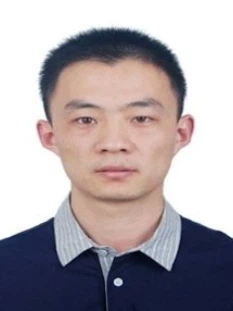
Assoc. Prof. Zhuhong Shao
Capital Normal University, China
Shao Zhuhong is an associate professor at the College of Artificial Intelligence, Capital Normal University, Beijing, China. He has been selected for the "Talent Support Program" of Capital Normal University - Yanjing Talent Support Project (2024) and the "Young Yanjing Scholar Cultivation Object" of Capital Normal University (2017-2019). He is also a visiting professor at Jilin Medical University (2026-2029). He has been responsible for several national natural science foundation projects, Beijing Education Commission research plans, and Beijing Organization Department's outstanding talent projects. His main research fields include video understanding and analysis, multimodal emotion recognition and health perception, and the intersection of artificial intelligence and education/medicine. He has published/co-authored over 100 papers, including papers published as the first or corresponding author in journals such as IEEE Transactions on Affective Computing, IEEE Journal of Biomedical and Health Informatics, and Pattern Recognition. He has obtained 32 national invention patents. He has co-authored a monograph. Currently, he is a senior member of CSIG/CCF and a member of the Special Committee for Emotional Computing and Understanding of CSIG.
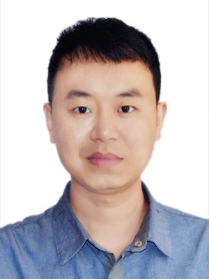
Assoc. Prof. Fengjian Yang
Yang Fengjian is currently Vice Dean and Associate Professor at the School of Biomedical Engineering, Jilin Medical University, where he is responsible for discipline development and scientific research management. His research interests include biomedical signal acquisition and processing, medical applications of artificial intelligence, and three-dimensional reconstruction of medical images. He has led three provincial-level research projects and participated in more than ten provincial and higher-level research projects. He was invited to deliver a special report at the Jilin Digital Health Technology Annual Conference. He has published more than ten academic papers in domestic and international journals and conferences, and has been granted two invention patents and ten utility model patents.
Assoc. Prof. Bicao Li
Bicao Li is an Associate Professor at the School of Information and Communication Engineering, Zhongyuan University of Technology. He received his Ph.D. in Computer Science from Southeast University in 2016. He was a Visiting Scholar at the University of Washington (2019-2020) and a Postdoctoral Fellow at Zhengzhou University. His research focuses on image registration, multi-source image fusion, medical image analysis, and deep learning. He has published over 70 papers in journals such as IEEE Transactions on Instrumentation and Measurement, Expert Systems with Applications and Applied Soft Computing. Dr. Li has led numerous grants, including the National Natural Science Foundation of China (NSFC) and the China Postdoctoral Science Foundation. He is the recipient of three provincial Science and Technology Progress Awards and two first prizes for Higher Education Teaching Achievement in Henan Province. He currently serves as the Head of the Electronic Information Engineering Department.
Dr. Wanjun Tao
Wanjun Tao, PhD in Engineering, is currently a full-time faculty member at the School of Electrical and Electronic Engineering, Anhui Institute of Information Technology. He has extensive front-line industrial R&D experience and previously served as Chief System Engineer and Lead Expert of the Nanjing Enterprise Expert Studio. His research focuses on the technical innovation and engineering development of radar and electronic warfare systems. His research interests cover radar and electronic countermeasure technology, intelligent information processing, integrated circuits, and implantable microsystems. He has presided over and core-participated in the development of multiple officially certified radar and electronic warfare equipment models, and has published more than ten academic papers in domestic and international journals and conference proceedings.

Jilin Medical University, China
Zhongyuan University of Technology, China
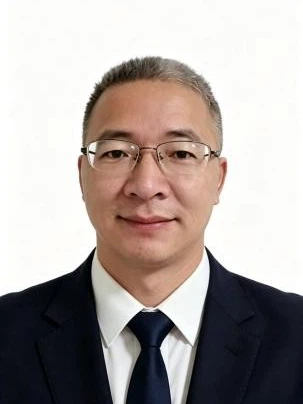
Anhui Institute of Information Technology, China
 Chinese
 Chinese